Wiring and config done properly
The electronics side of a build is where most problems start and where they are cheapest to avoid. Controllers wired neatly, looms made to fit, limits set to your hardware, and faults diagnosed with instruments rather than guesswork.
A day job in electronics, applied to boards
I work as a Principal Electronics Engineer and hold a master’s in Electronics Engineering. The habits that come with that — correct conductor sizing, sensible connector choice, terminations that survive vibration, documentation you can actually follow — are the same habits that make a board reliable.
In practice that means a loom built for your chassis rather than bodged to length, a controller configured around your pack rather than left at defaults, and a written record of what was changed so nothing is a mystery six months later.
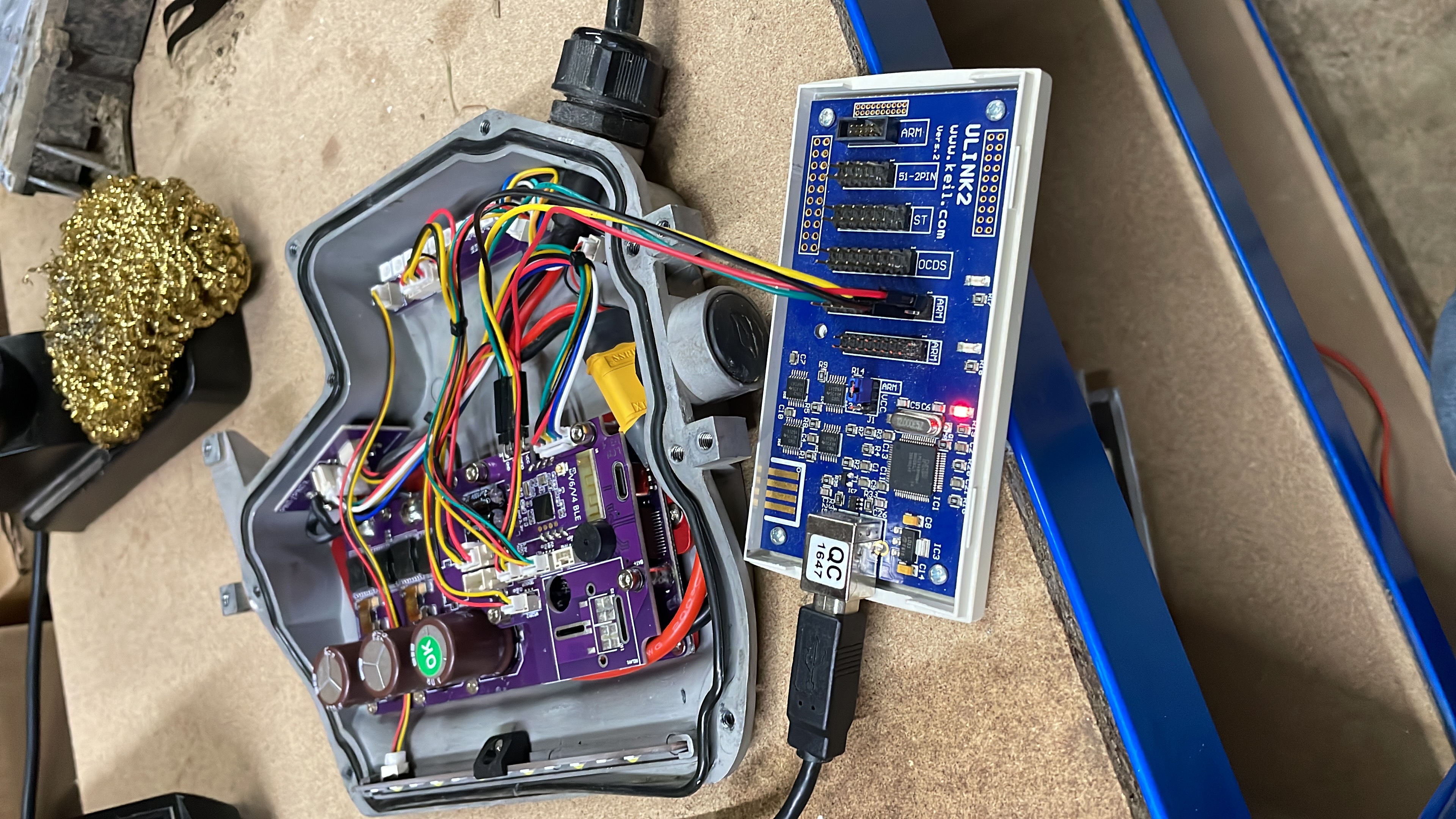
What we do
Whole builds, single jobs, or a look at something that is not behaving.
New build wiring
Controller, motor, battery and sensors wired as a complete harness. Correct gauge for the current, crimped and sealed terminations, strain relief where the loom moves and heatshrink labels so the next person can follow it.
Custom looms
Built to the length your chassis actually needs rather than coiled up in the box. Routed clear of rail edges and heat, with connectors chosen for the vibration a board sees rather than what came in the kit.
Controller config
Motor detection run properly, current and voltage limits set to your pack rather than left at defaults, and the float package tuned around how you ride. Config files handed over so you can go back to a known state.
Fault finding
Intermittent cutouts, phantom faults, sensor errors and looms that have chafed. Logs read and measurements taken before anything gets swapped, so you are not buying parts on a guess.
Firmware and updates
Firmware brought up to a version that suits your hardware, with settings backed up first. Rollback plan agreed before we start.
Second opinion
A build someone else did, checked over. Wiring, limits and thermal behaviour reviewed, with an honest list of what matters and what does not.
Tell us what you are building
Electronics work is quoted after a conversation — the hardware, the pack and how finished you want it all change the job. Send the board, the kit you are using and what it is doing wrong if anything.